

About The Committee
The Standing Committee on Court Interpreters (COCI) is the policymaking body appointed by the Supreme Court of Georgia to oversee the development of a statewide plan for the use of interpreters in Georgia courts during civil, criminal matters, or court-related events. The Committee is composed of judges, lawyers, non-lawyers, legislators, court administrators, and interpreters.
The Committee on Interpreters’ mission is to provide interpreter licensing and education services for Georgia courts to ensure the rights of non-English speaking persons in Court and during any court-related events.
Created in 2003 by a Supreme Court order, the Committee is charged with regulating a statewide comprehensive court interpreting program, developing the criteria for the training and certification of interpreters, designating languages for which it will require certification, and establishing standards of conduct for interpreters.
Another responsibility of the Committee is to provide access to competent, professional interpreters to ensure understanding and participation for all non-English speaking persons involved in any court event. The Committee does this by providing an online registry of licensed interpreters, which assists the public and members of the Bench and Bar in locating qualified court interpreters throughout the State. The Committee’s staff also trains judges from different levels of courts, court clerks, court staff, and members of the State Bar about its rules and regulations and the proper use and behavior of interpreters in a courtroom setting. The Committee meets quarterly to consider pertinent issues to improve language access resources in Georgia’s courts.
Rules for Legal Interpreting in the State of Georgia
Click Here to Access the Rules
Candidates Seeking Reciprocity
Georgia is a member of the National Center for State Courts, Council of Language Access Coordinators (CLAC). The Committee may allow reciprocity to those interpreters who are certified by states that are active CLAC members. The Committee may grant reciprocity may to those persons who:
Completed a 16-hour training court offered by the credentialing State.
Took and passed the CLAC (Council of Language Access in the Courts) written exam with a score of 80% or more.
Took and passed the CLAC (Council of Language Access in the Courts) oral exam. OPI takers must pass with a scale score of “Superior” in both English and the target language for which they seek reciprocity.
The Committee may extend reciprocity to those individuals who started the process in another state only if the requirements of the State in which the candidate began the process are similar to Georgia.
For example: if the applicant attended an orientation workshop at the State where they started the licensing process and that State requires a candidate to participate in a training that is shorter or radically different than Georgia’s, the Committee will ask the candidate to attend the orientation workshop in Georgia. Please note: All candidates seeking reciprocity in Georgia must have completed the oral exam in ONE seating and not more than one seating. If you meet these requirements, please create a GCR account and e-mail staff asking for reciprocity and name the State from which you are seeking the same. Once staff receives the request, staff will contact the State from which you are seeking reciprocity, asking for verification of the three requirements above. Candidates will receive a notification upon completion of said verification so the candidate may proceed with attaining their Georgia license.
Committee Videos
Interpreter Spotlight
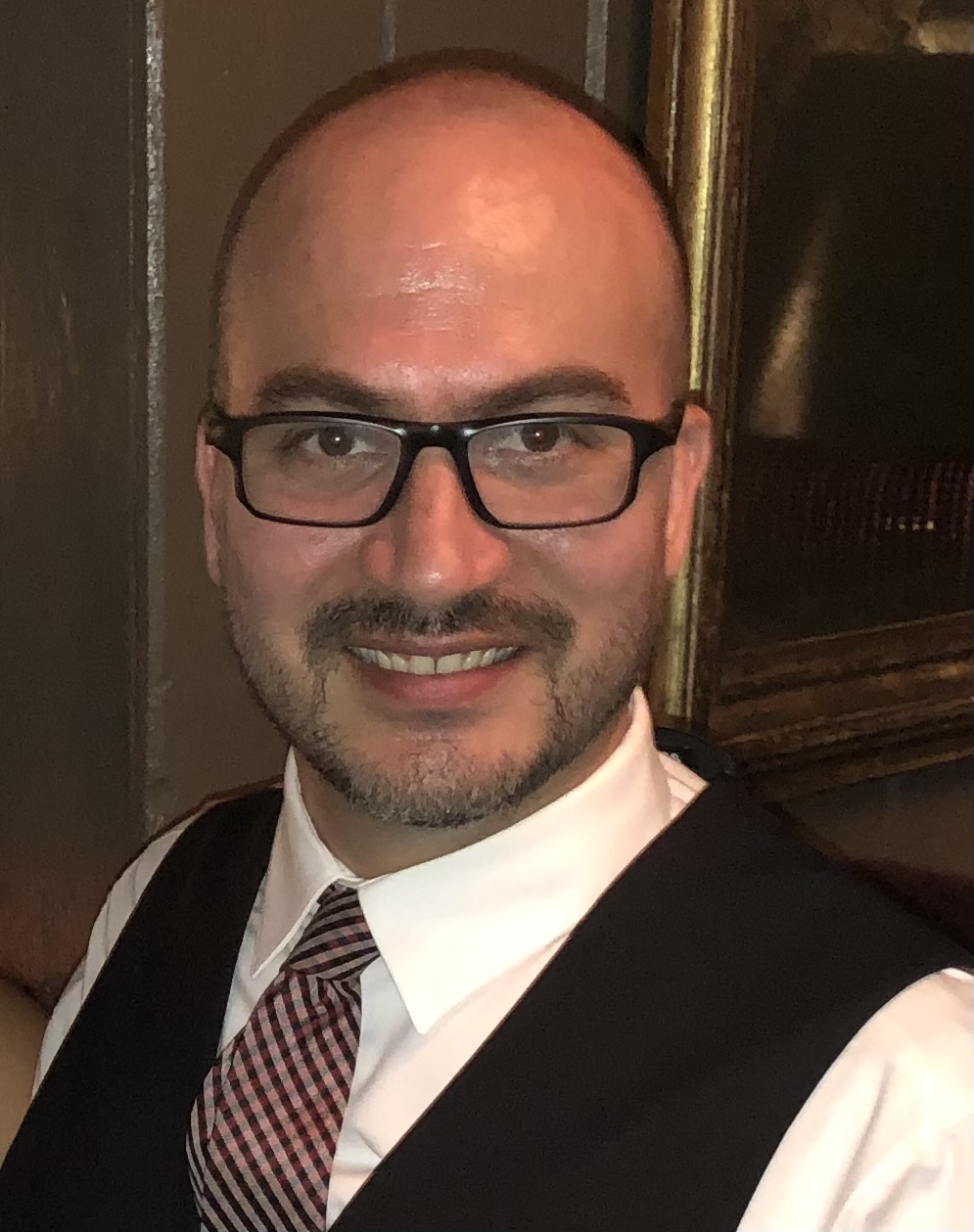
Alejandro Echevarria Gil
Mr. Alejandro Echevarria Gil was born and raised in Guadalajara, Mexico, and moved to Texas in high school due to his mother being a bilingual teacher. He developed a love for language and travel from her. In the U.S.A. he was exposed for the first time to a multicultural and language-diverse community. He studied at the Universidad Autonoma de Guadalajara and the University of North Texas earning an associate’s degree in IT management.
In his mid-20’s, with a persistent passion for language, he decided to have an adventure and live in Italy for six months. Alejandro enrolled in Siena Italian Studies learning about the history of Italian emigration and the history of the EU. With Italians as roommates, he dove full-immersion into the language and culture. Those six months turned into almost four years of working with the school and teaching/tutoring English and Spanish. Being a de facto interpreter/translator, working with foreign student’s immigration processes, host family placements and volunteering for service-learning projects was not only a dream job, but kept exposing him to more cultures, languages, and beliefs.
Alejandro returned to the USA and spent ten years working hospitality. Like many others, during the Covid-19 pandemic, he lost his job needing to reinvent himself. His wife suggested interpretation and he listened. The rest is history. Court & Healthcare Certified, Alejandro works all over the state of Georgia and even travels countrywide for immigration courts to assist the DOJ-EOIR. Lingua Interpretation strives to help not just public and private individuals, but also fellow upcoming interpreters with their ability to reach their full potential. Mr. Echevarria was recently appointed President of the Atlanta Association of Interpreters and Translators (AAIT).
Frequently Asked Questions (FAQs)
How long do I have to complete the certification process after attending the Orientation Workshop?
Candidates have 12 months from the date of completing the Orientation Workshop to finish the entire certification process, including passing both the written and oral exams. If the process is not completed within this timeframe, candidates may need to retake the Orientation Workshop.
Do I need to complete the Orientation before taking the Written Exam?
Yes, the Orientation Workshop is a mandatory prerequisite for taking the Written Exam. You must complete the 16-hour Orientation Workshop and receive your certificate before you can register for the Written Exam.
What's the difference between the Oral Certification Exam and the Oral Proficiency Interview (OPI)?
The Oral Certification Exam is specifically designed for court interpreting and tests your ability to interpret legal proceedings accurately. The Oral Proficiency Interview (OPI) is a general language proficiency test that measures your overall speaking ability in the target language. For court interpreter certification, you need to take the Oral Certification Exam, not the OPI.
Can I observe court proceedings before passing the oral exams?
Yes, you are encouraged to observe court proceedings as part of your preparation. However, you must obtain permission from the court and follow their specific guidelines for observers. This observation can help you understand court procedures and terminology before taking your oral exams.
What happens if I don't pass the background check?
If you don’t pass the background check, you will not be eligible for court interpreter certification. The Committee will review the results and may provide you with information about the specific issues found. You may have the opportunity to address these issues or appeal the decision, depending on the circumstances.
Contact Us
244 Washington Street SW,
Suite 300
Atlanta, GA 30334